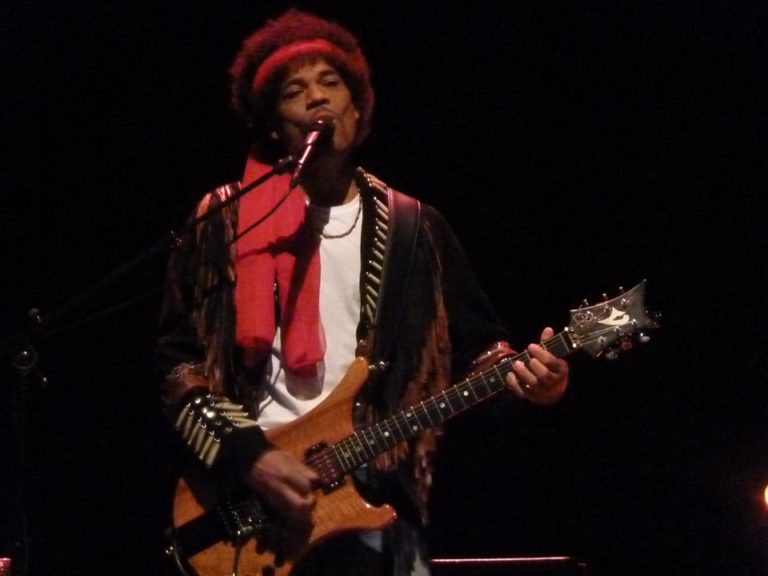
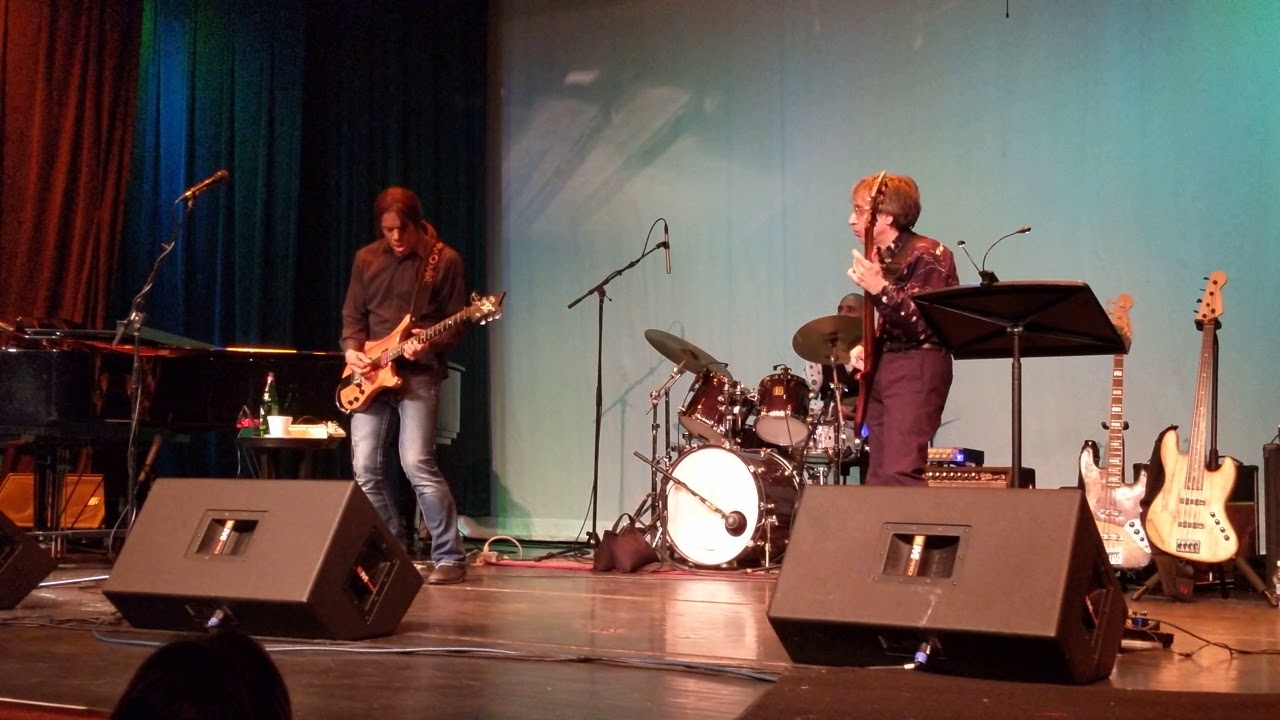
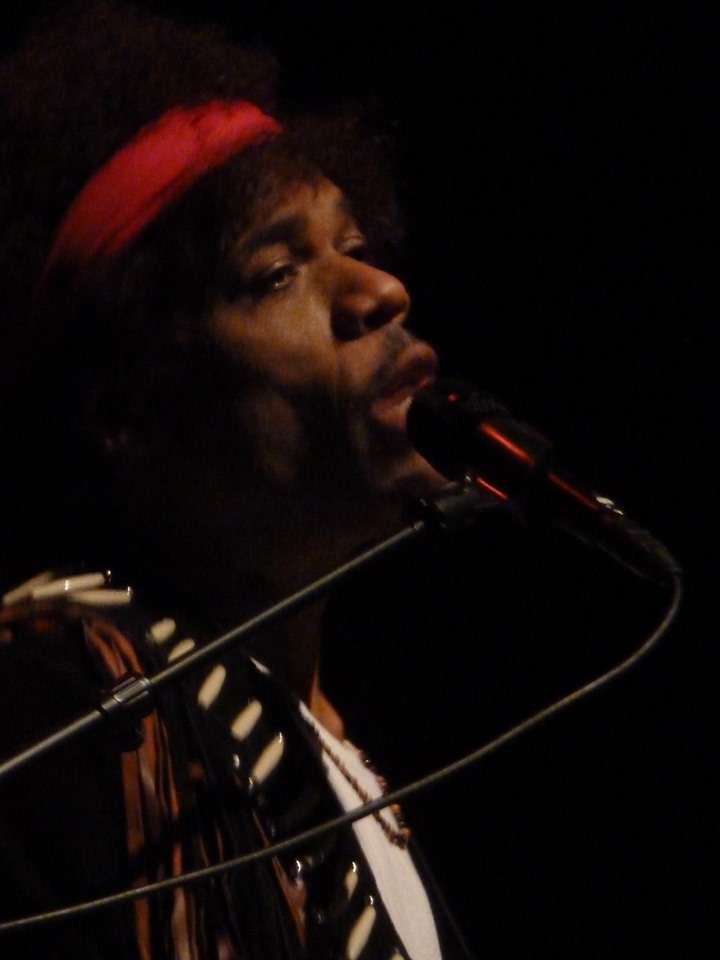
Stanley Jordan plays Jimi is a tribute project, but it is not designed as a museum piece or a simple imitation of Jimi Hendrix. The idea is to imagine how Hendrix’s music might live on stage today if it were filtered through Stanley Jordan’s identity, technique and long history as a jazz and improvising guitarist. Jordan approaches the repertoire with deep respect for the original spirit, but also with the freedom of an artist who has spent decades expanding what the guitar can do in real time.
The connection is natural. Before becoming internationally known for his touch technique, his four Grammy nominations and his landmark success on the jazz charts, Jordan absorbed rock and blues vocabulary as part of his early musical formation. Hendrix was one of the first guitar figures to open that door. In this project, that influence returns through a mature musical lens: blues-rock energy, jazz harmony, improvisational risk, theatrical presence and a willingness to let the music change shape on stage. The result is a concert rather than a reenactment.
A live performance such as Little Wing shows how the project works at close range. The familiar Hendrix songbook becomes a space for surprise, tone, groove and interaction. Jordan’s guitar language can carry melody, bass movement, chordal color and solo lines with unusual independence, which lets the arrangement stretch without losing contact with the song. When the band leans into the rock side, the performance keeps the urgency of the source material; when it opens harmonically, Jordan’s jazz background gives the music another dimension.
The project also has a visual and theatrical element, because Jordan enters the world of Hendrix not only through repertoire but through stage persona and musical imagination. That does not turn the show into parody. It gives the concert a frame: a fantasy Hendrix performance shaped by a world-class guitarist who understands both the historical weight of the material and the need to keep it alive. For festivals and venues, Stanley Jordan plays Jimi offers a direct bridge between jazz audiences, guitar audiences, blues-rock listeners and fans of adventurous live performance. The presentation page below gives the full project context, while this video captures one concrete live episode from that concept.
The booking value of the project is also clear: it carries a name, a repertoire and a story that audiences can recognize immediately, but it is still musically open enough to feel current. Hendrix material gives the set a strong cultural signal, while Jordan’s personal vocabulary keeps the performance from becoming predictable. This is especially useful for events that want to connect jazz credibility with rock energy, or for festivals that need a guitar-centered show with both accessibility and artistic depth. Each video post therefore functions as more than documentation. It is a small window into how the project sounds, how it moves on stage, and how Jordan’s identity reshapes the Hendrix legacy for a contemporary live audience.
This extra context is included to keep the media post useful as a standalone page as well as a video or photo entry. It gives search engines and readers enough information to understand the artist, the project, the live setting and the booking relevance without replacing the main presentation page. The video or album remains the primary content, while the editorial notes explain why the performance matters, where it sits in the artist’s wider work, and how a promoter, venue or festival can follow the internal link for the full profile before sending a professional booking request.
Stanley Jordan plays Jimi is a tribute project, but it is not designed as a museum piece or a simple imitation of Jimi Hendrix. The idea is to imagine how Hendrix’s music might live on stage today if it were filtered through Stanley Jordan’s identity, technique and long history as a jazz and improvising guitarist. Jordan approaches the repertoire with deep respect for the original spirit, but also with the freedom of an artist who has spent decades expanding what the guitar can do in real time.
The connection is natural. Before becoming internationally known for his touch technique, his four Grammy nominations and his landmark success on the jazz charts, Jordan absorbed rock and blues vocabulary as part of his early musical formation. Hendrix was one of the first guitar figures to open that door. In this project, that influence returns through a mature musical lens: blues-rock energy, jazz harmony, improvisational risk, theatrical presence and a willingness to let the music change shape on stage. The result is a concert rather than a reenactment.
A live performance such as Foxy Lady shows how the project works at close range. The familiar Hendrix songbook becomes a space for surprise, tone, groove and interaction. Jordan’s guitar language can carry melody, bass movement, chordal color and solo lines with unusual independence, which lets the arrangement stretch without losing contact with the song. When the band leans into the rock side, the performance keeps the urgency of the source material; when it opens harmonically, Jordan’s jazz background gives the music another dimension.
The project also has a visual and theatrical element, because Jordan enters the world of Hendrix not only through repertoire but through stage persona and musical imagination. That does not turn the show into parody. It gives the concert a frame: a fantasy Hendrix performance shaped by a world-class guitarist who understands both the historical weight of the material and the need to keep it alive. For festivals and venues, Stanley Jordan plays Jimi offers a direct bridge between jazz audiences, guitar audiences, blues-rock listeners and fans of adventurous live performance. The presentation page below gives the full project context, while this video captures one concrete live episode from that concept.
The booking value of the project is also clear: it carries a name, a repertoire and a story that audiences can recognize immediately, but it is still musically open enough to feel current. Hendrix material gives the set a strong cultural signal, while Jordan’s personal vocabulary keeps the performance from becoming predictable. This is especially useful for events that want to connect jazz credibility with rock energy, or for festivals that need a guitar-centered show with both accessibility and artistic depth. Each video post therefore functions as more than documentation. It is a small window into how the project sounds, how it moves on stage, and how Jordan’s identity reshapes the Hendrix legacy for a contemporary live audience.
This extra context is included to keep the media post useful as a standalone page as well as a video or photo entry. It gives search engines and readers enough information to understand the artist, the project, the live setting and the booking relevance without replacing the main presentation page. The video or album remains the primary content, while the editorial notes explain why the performance matters, where it sits in the artist’s wider work, and how a promoter, venue or festival can follow the internal link for the full profile before sending a professional booking request.
Stanley Jordan plays Jimi is a tribute project, but it is not designed as a museum piece or a simple imitation of Jimi Hendrix. The idea is to imagine how Hendrix’s music might live on stage today if it were filtered through Stanley Jordan’s identity, technique and long history as a jazz and improvising guitarist. Jordan approaches the repertoire with deep respect for the original spirit, but also with the freedom of an artist who has spent decades expanding what the guitar can do in real time.
The connection is natural. Before becoming internationally known for his touch technique, his four Grammy nominations and his landmark success on the jazz charts, Jordan absorbed rock and blues vocabulary as part of his early musical formation. Hendrix was one of the first guitar figures to open that door. In this project, that influence returns through a mature musical lens: blues-rock energy, jazz harmony, improvisational risk, theatrical presence and a willingness to let the music change shape on stage. The result is a concert rather than a reenactment.
A live performance such as Voodoo Chile shows how the project works at close range. The familiar Hendrix songbook becomes a space for surprise, tone, groove and interaction. Jordan’s guitar language can carry melody, bass movement, chordal color and solo lines with unusual independence, which lets the arrangement stretch without losing contact with the song. When the band leans into the rock side, the performance keeps the urgency of the source material; when it opens harmonically, Jordan’s jazz background gives the music another dimension.
The project also has a visual and theatrical element, because Jordan enters the world of Hendrix not only through repertoire but through stage persona and musical imagination. That does not turn the show into parody. It gives the concert a frame: a fantasy Hendrix performance shaped by a world-class guitarist who understands both the historical weight of the material and the need to keep it alive. For festivals and venues, Stanley Jordan plays Jimi offers a direct bridge between jazz audiences, guitar audiences, blues-rock listeners and fans of adventurous live performance. The presentation page below gives the full project context, while this video captures one concrete live episode from that concept.
The booking value of the project is also clear: it carries a name, a repertoire and a story that audiences can recognize immediately, but it is still musically open enough to feel current. Hendrix material gives the set a strong cultural signal, while Jordan’s personal vocabulary keeps the performance from becoming predictable. This is especially useful for events that want to connect jazz credibility with rock energy, or for festivals that need a guitar-centered show with both accessibility and artistic depth. Each video post therefore functions as more than documentation. It is a small window into how the project sounds, how it moves on stage, and how Jordan’s identity reshapes the Hendrix legacy for a contemporary live audience.
This extra context is included to keep the media post useful as a standalone page as well as a video or photo entry. It gives search engines and readers enough information to understand the artist, the project, the live setting and the booking relevance without replacing the main presentation page. The video or album remains the primary content, while the editorial notes explain why the performance matters, where it sits in the artist’s wider work, and how a promoter, venue or festival can follow the internal link for the full profile before sending a professional booking request.
Stanley Jordan plays Jimi is a tribute project, but it is not designed as a museum piece or a simple imitation of Jimi Hendrix. The idea is to imagine how Hendrix’s music might live on stage today if it were filtered through Stanley Jordan’s identity, technique and long history as a jazz and improvising guitarist. Jordan approaches the repertoire with deep respect for the original spirit, but also with the freedom of an artist who has spent decades expanding what the guitar can do in real time.
The connection is natural. Before becoming internationally known for his touch technique, his four Grammy nominations and his landmark success on the jazz charts, Jordan absorbed rock and blues vocabulary as part of his early musical formation. Hendrix was one of the first guitar figures to open that door. In this project, that influence returns through a mature musical lens: blues-rock energy, jazz harmony, improvisational risk, theatrical presence and a willingness to let the music change shape on stage. The result is a concert rather than a reenactment.
A live performance such as Purple Haze shows how the project works at close range. The familiar Hendrix songbook becomes a space for surprise, tone, groove and interaction. Jordan’s guitar language can carry melody, bass movement, chordal color and solo lines with unusual independence, which lets the arrangement stretch without losing contact with the song. When the band leans into the rock side, the performance keeps the urgency of the source material; when it opens harmonically, Jordan’s jazz background gives the music another dimension.
The project also has a visual and theatrical element, because Jordan enters the world of Hendrix not only through repertoire but through stage persona and musical imagination. That does not turn the show into parody. It gives the concert a frame: a fantasy Hendrix performance shaped by a world-class guitarist who understands both the historical weight of the material and the need to keep it alive. For festivals and venues, Stanley Jordan plays Jimi offers a direct bridge between jazz audiences, guitar audiences, blues-rock listeners and fans of adventurous live performance. The presentation page below gives the full project context, while this video captures one concrete live episode from that concept.
The booking value of the project is also clear: it carries a name, a repertoire and a story that audiences can recognize immediately, but it is still musically open enough to feel current. Hendrix material gives the set a strong cultural signal, while Jordan’s personal vocabulary keeps the performance from becoming predictable. This is especially useful for events that want to connect jazz credibility with rock energy, or for festivals that need a guitar-centered show with both accessibility and artistic depth. Each video post therefore functions as more than documentation. It is a small window into how the project sounds, how it moves on stage, and how Jordan’s identity reshapes the Hendrix legacy for a contemporary live audience.
This extra context is included to keep the media post useful as a standalone page as well as a video or photo entry. It gives search engines and readers enough information to understand the artist, the project, the live setting and the booking relevance without replacing the main presentation page. The video or album remains the primary content, while the editorial notes explain why the performance matters, where it sits in the artist’s wider work, and how a promoter, venue or festival can follow the internal link for the full profile before sending a professional booking request.
Stanley Jordan plays Jimi is a tribute project, but it is not designed as a museum piece or a simple imitation of Jimi Hendrix. The idea is to imagine how Hendrix’s music might live on stage today if it were filtered through Stanley Jordan’s identity, technique and long history as a jazz and improvising guitarist. Jordan approaches the repertoire with deep respect for the original spirit, but also with the freedom of an artist who has spent decades expanding what the guitar can do in real time.
The connection is natural. Before becoming internationally known for his touch technique, his four Grammy nominations and his landmark success on the jazz charts, Jordan absorbed rock and blues vocabulary as part of his early musical formation. Hendrix was one of the first guitar figures to open that door. In this project, that influence returns through a mature musical lens: blues-rock energy, jazz harmony, improvisational risk, theatrical presence and a willingness to let the music change shape on stage. The result is a concert rather than a reenactment.
A live performance such as Hey Joe shows how the project works at close range. The familiar Hendrix songbook becomes a space for surprise, tone, groove and interaction. Jordan’s guitar language can carry melody, bass movement, chordal color and solo lines with unusual independence, which lets the arrangement stretch without losing contact with the song. When the band leans into the rock side, the performance keeps the urgency of the source material; when it opens harmonically, Jordan’s jazz background gives the music another dimension.
The project also has a visual and theatrical element, because Jordan enters the world of Hendrix not only through repertoire but through stage persona and musical imagination. That does not turn the show into parody. It gives the concert a frame: a fantasy Hendrix performance shaped by a world-class guitarist who understands both the historical weight of the material and the need to keep it alive. For festivals and venues, Stanley Jordan plays Jimi offers a direct bridge between jazz audiences, guitar audiences, blues-rock listeners and fans of adventurous live performance. The presentation page below gives the full project context, while this video captures one concrete live episode from that concept.
The booking value of the project is also clear: it carries a name, a repertoire and a story that audiences can recognize immediately, but it is still musically open enough to feel current. Hendrix material gives the set a strong cultural signal, while Jordan’s personal vocabulary keeps the performance from becoming predictable. This is especially useful for events that want to connect jazz credibility with rock energy, or for festivals that need a guitar-centered show with both accessibility and artistic depth. Each video post therefore functions as more than documentation. It is a small window into how the project sounds, how it moves on stage, and how Jordan’s identity reshapes the Hendrix legacy for a contemporary live audience.
This extra context is included to keep the media post useful as a standalone page as well as a video or photo entry. It gives search engines and readers enough information to understand the artist, the project, the live setting and the booking relevance without replacing the main presentation page. The video or album remains the primary content, while the editorial notes explain why the performance matters, where it sits in the artist’s wider work, and how a promoter, venue or festival can follow the internal link for the full profile before sending a professional booking request.
Reno Jazz Festival award winner Stanley Jordan, American
Stanley Jordan (8)
Line-up
Stanley Jordan | Guitar and voice Miles Davis, Herbie Hancock, Phil Lesh, Dave Matthews Band, Kenny Rogers, Dionne Warwick, Carmen McRae, Les Paul, Stanley Clarke, Art Blakey, Quincy Jones, The String Cheese Incident, Umphrey’s McGee, moe.
Laurence Cottle | Bass Eric Clapton, Brian Eno, Bill Bruford, Buddy Rich Big Band, Alan Parsons Project, Black Sabbath, Mike Oldfield, Tony Iommi, Cozy Powell, Don Airey, Claire Martin
Kornel Horvath | Percussion Al Di Meola, Chick Corea, Steve Gadd, John Patitucci, Ferenc Snétberger, László Dés, Gábor Dörnyei, Stanley Jordan, Dom Famularo
Gábor Dörnyei | Drums Stanley Jordan, Kornel Horvath, Dom Famularo, Pete Lockett, Terry Bozzio, Jojo Mayer, Billy Cobham, Gavin Harrison, Ian Paice, Steve Smith, Chris Coleman
OR
Kenwood Dennard | Drums Miles Davis, Herbie Hancock, Dizzy Gillespie, Pat Martino, Jaco Pastorius, Sting, Maceo Parker, Marcus Miller, Vernon Reid, John Scofield, The Allman Brothers Band, Phish
Style
A front-row view of Stanley Jordan’s two-handed “touch technique” as both a harmonic engine and a singing voice, powered by a drummer’s drummer and a bassist with prog-jazz precision. The trio moves fluently between modern jazz, groove-driven fusion, and song-form reinventions—keeping the pulse elastic while the harmony opens wide.
Profile
Stanley Jordan Trio frames Jordan’s celebrated touch technique—two-handed tapping applied with piano-like independence—as a complete band language, and the addition of Kornel Horvath opens a new spectrum of rhythmic color. Guitar and voice operate as intertwined narratives: chordal counterpoint, melodic lead lines, and sung phrasing share the same breath. Laurence Cottle brings a deep, articulate low-end that can lock into big-band punch or shift into lyrical, compositional bass lines; Kenwood Dennard answers with a polyrhythmic, colorist approach that turns time into texture without losing drive. With Horvath, the rhythm architecture becomes truly three-dimensional: hand drums, shakers and resonant percussion add micro-dynamics, breath, and timbral “hooks,” creating a live sound that can feel orchestral at conversational volume—virtuosic, never clinical, and built for the immediacy of the room.
Details
Jordan’s touch-driven language has inspired superlatives for decades. “Genius is a word often tossed around in musical circles, but it has been rightfully applied to Stanley Jordan.”(Leonard Feather, Los Angeles Times, via stanleyjordan.com, 2019-07-30)
Cottle is celebrated for his feel and leadership in large-ensemble contexts. “Special plaudits to bassist Laurence Cottle…”(Frank Griffith, London Jazz News, 2017-05-25)
Dennard’s drumming is praised for both drive and imagination. “…a rare kind of joyous abandon… his drums play an integral role…”(Timothy J. O’Keefe, All About Jazz, 2009-03-23)
Stanley Jordan — guitar & voice
American guitarist and vocalist Stanley Jordan is a landmark innovator of the two‑handed “touch technique,” applying piano-like independence to harmony and melody on the fretboard. His 1985 breakthrough Magic Touch reached the top of Billboard’s jazz chart for a record 51 weeks and helped define a new mainstream for modern guitar. A relentless touring artist, he has performed in over 60 countries and moves fluently between straight-ahead jazz, pop/rock reinterpretations, and solo, orchestral-style guitar sets. Alongside his band work, Jordan has collaborated widely—appearing with artists from Les Paul to major jam-band stages—and has increasingly connected performance with music-therapy-oriented outreach.
Laurence Cottle — bass
Welsh bassist, composer, arranger, and bandleader Laurence Cottle is a high-level force across jazz, fusion, and rock—valued equally for deep pocket, clean articulation, and a distinctly “compositional” approach to the bass line. Based in London since his formative years, he has worked with major names on both sides of the spectrum: jazz collaborations include Wayne Shorter, Al Jarreau, Peter Erskine and the Buddy Rich Big Band, while rock credits include Black Sabbath, Ian Gillan, Cozy Powell, and Ginger Baker. He has recorded with artists such as Eric Clapton, Van Morrison, Brian Eno, and Mike Oldfield, leads his own Big Band (active since 1998), and is also active in education, including a professorship in jazz bass.
Kenwood Dennard — drums
New York–born drummer, composer, and educator Kenwood “Woody” Dennard is celebrated for a rare blend of deep funk feel, jazz vocabulary, and polyrhythmic imagination—driving a band hard while coloring every bar. His performance and recording history spans modern jazz, fusion, and pop, with credits including Miles Davis and Quincy Jones (Live at Montreux), Sting (Nothing Like the Sun), and work alongside artists such as Dizzy Gillespie, Herbie Hancock, Chick Corea, and George Clinton. A key figure in the Brand X story, he is also recognized for simultaneous multi-instrument performance concepts and for his long-standing educational impact: he served as a Berklee College of Music professor, teaching specialist ensembles including the music of Jimi Hendrix and James Brown.
Kornel Horvath — percussion
Hungary-born percussionist Kornel Horvath is widely recognized for a distinctive blend of traditional hand-percussion craft and modern, high-impact groove language. Best known internationally as one half of the electrifying duo tHUNder Duo with drummer Gábor Dörnyei, he was highlighted as the 2016 “Best Percussionist” winner in MusicRadar’s overview of the world’s leading players. His palette centers on resonant hand drums and uncommon percussion colors—designed to add depth, motion, and air around the beat rather than simply doubling it. Horvath’s work spans contemporary jazz and fusion contexts, including recording credits on Al Di Meola’s Consequence of Chaos, and long-running European collaborations such as Trio Stendhal with Ferenc Snétberger and László Dés. Onstage, his role is equal parts engine and orchestrator: micro-dynamics, timbral hooks, and quick, musical responses that turn the rhythm section into a living arrangement.
Selected discography highlights
Stanley Jordan — Magic Touch (1985), Stolen Moments (1985), Cornucopia (1990), Friends (2014)
Kevin Eubanks/Stanley Jordan: Duets — DownBeat “DownBeat calls it near ‘perfection’: two different personalities in an intimate dialogue where every detail feels inevitable.”https://downbeat.com/reviews/detail/duets
EUROPEAN EXCLUSIVE in collaboration with MCM Management
a
Stanley Jordan plays Jimi Hendrix
Stanley Jordan plays Jimi Hendrix
Stanley Jordan plays Jimi Hendrix
Stanley Jordan plays Jimi Hendrix
Stanley Jordan plays Jimi Hendrix
Stanley Jordan plays Jimi Hendrix
Stanley Jordan plays Jimi Hendrix
Stanley Jordan plays Jimi Hendrix
Stanley Jordan plays Jimi Hendrix
Stanley Jordan plays Jimi Hendrix
Stanley Jordan plays Jimi Hendrix
https://www.youtube.com/watch?v=rTJAIvqImOk
Stanley Jordan – Guitar
Gary Kelly – Bass
Kenwood Dennard – Drums
World-renowned guitarist Stanley Jordan has developed a new live show called “Stanley Plays Jimi.” This is a tribute show, but it’s not pure imitation. Instead Stanley builds on Jimi’s legacy in a creative way. As Stanley explains it, “This is my fantasy Jimi Hendrix concert if Jimi were still alive and playing today. By re-imagining his music and channeling his persona I try to bring that fantasy to life.”
It may be surprising that Stanley Jordan would take on a project like this. After all, Stanley is already a well-known guitarist with a signature style, four Grammy nominations, a cameo in a Blake Edwards film (Blind Date), and a host of TV appearances over a long career including Jimmy Fallon, David Letterman, Jay Leno and Johnny Carson to name a few. But Stanley explains, “I feel a strong connection to Jimi Hendrix because he was the first guitarist I emulated as a child. Out of love for Jimi Hendrix and his music I feel a strong desire to try to keep his legacy alive.”
https://www.youtube.com/watch?v=P8MER2qL4g4
It may also be surprising that a rock legend like Hendrix would get so much love from a jazz legend like Jordan. Stanley’s 1985 album Magic Touch was #1 on Billboard’s jazz chart for 51 weeks, and Stanley has shared the stage or recorded with jazz artists such as Benny Carter, Dizzy Gillespie, Miles Davis and Billy Cobham. But again, hearing it from Stanley, “I actually played rock and blues before I played jazz. In fact, Jimi Hendrix’ constant searching for new sounds inspired me to move toward jazz in the first place.”
In recent years Stanley has performed with many artists in the rock and jam band worlds, including the Dave Matthews Band, Umphrey’s McGee, Moe. and more. Stanley says, “Returning to my rock roots has been an absolute joy artistically, and with this project I’m taking that to a new level.”
Another important aspect is the embodiment of Jimi’s persona. Stanley actually steps onto the stage as Jimi Hendrix so there is a theatrical element to the show. But this is not a comedic caricature nor is it a theatrical play – it’s a concert. It’s a concert built upon a sincere and heartfelt effort to recreate the jaw-dropping experience of witnessing Jimi Hendrix live while at the same time bringing Jimi’s legacy up to date in a believable way. Wow! Tall order to fill–no? That’s why you need a world-class artist of Stanley Jordan’s caliber to pull it off.
https://www.youtube.com/watch?v=A-LGCNpGb5I
Stanley Jordan plays Jimi Hendrix | Blues – Rock (US) – This extra touch of portraying the Hendrix of today rather then yesterday keeps the show creative and fresh for both Stanley and the audience and it gives Stanley’s fans a new insight into Stanley’s own evolution. It also makes the show more authentic in a certain sense, because a real Hendrix concert would have surprises and unexpected turns. “Stanley Jordan Plays Jimi Hendrix” tries to re-create both the energy and the creativity of the real thing.
“This would be a challenging endeavor for anyone,” Stanley explains. “For sure you can put on an impressive show with just 2 or 3 of his techniques. But I’m trying my best to cover as much of his work as possible while at the same time trying to build on it, which I think is really the heart and soul of this project. The truth is, no one really knows what Jimi Hendrix would be doing today. But we do know he would have kept evolving. This gives me some creative leeway and it lets my own identity come through because we’re viewing Hendrix thru my lens. But it’s also challenging for me because I can’t do just anything; It has to make sense and to come across as something Jimi might have actually done.”
One way Stanley builds on Jimi’s legacy is by expanding on some of the jazz elements that Jimi Hendrix was evidently reaching for toward the end of his life. Stanley says, “We know that he jammed with Rasaan Roland Kirk and Larry Young, and plans were underway to collaborate with Miles Davis and Gil Evans. You can hear him reaching and expanding his vocabulary on albums like Nine To The Universe, which was very influential to me as a youngster. And some of his compositions have a kind of jazzy shuffle, such as ‘Up from the Skies’ and ‘Belly Button Window.’ I try to expand on that.”
Stanley also builds on Jimi’s work by incorporating touch, or two-hand tapping techniques. Many people associate that more with Van Halen than with Hendrix but Stanley says, “I actually got the idea from Jimi Hendrix. I saw him do it with just his left hand, but that’s all I needed to see. I just added the right hand, which was an obvious extension.” And extend it he did. Today Stanley Jordan is considered by many to be the World’s best tapper, having developed it into a rich pianistic style.
Jimi Hendrix was no stranger to electronics and Stanley builds on that as well, saying, “Of course I use feedback and effects just as Jimi did. But I avoid programmed sequencers and prerecorded tracks because there just isn’t enough evidence that Jimi would have gone that route. And the real genius of what he did consisted in making himself part of the circuit rather than externalizing it. For Jimi, electronics were not an end in themselves but a means to an end–an extension of the instrument and a channel of his spirit.”
Stanley also adds a few original compositions to the setlist–fantasy songs that could have been written by Jimi today, just to fill out the repertoire and to give shape to some of the new concepts Jimi was developing. Remember–this is the Hendrix of today, not yesterday.
In terms of look and style, Stanley stays mostly faithful to Jimi’s traditional style. Of course we know Jimi could have evolved significantly in his clothing style by now but Stanley doesn’t speculate much in that area, explaining, “The truth is, in this show I’m both a musician and an actor, and I want my character to be believable. I feel that the best way to do that is to be fairly faithful to the Jimi Hendrix that we all know.”
“Stanley Plays Jimi” is a new project but it’s based on an old idea. Stanley says, “Back in 1970 at the age of 11 I was saddened to hear of Jimi’s passing. I decided there and then to try to continue his legacy, so I took up guitar. Of course my main goal was to be an original artist in my own right, but the concept of a Hendrix tribute has been in my mind pretty much from the start. Now, in the year of the 50th anniversary of Jimi’s historic Woodstock performance the time feels right to bring this idea to fruition.”
Gary Kelly (Bass)
Bassist Gary Kelly is no stranger to the music and times of Jimi Hendrix. As a bassist he has worked with many well-known artists from the 60’s and beyond. He has performed with The Mamas and Papas, Jimmy Buffet, and Martha and the Vandellas. He has also performed with many widely known guitarists: Stanley Jordan, Bill Frisell, Mike Stern, Larry Mitchell, Popa Chubby, and Rhett Tyler to name a few. Many of these were in the classic guitar trio format, with extensive improvisation. Gary has spent many years working in recording studios. He had the good fortune to work at Electric Lady Studios (the studio Jimi Hendrix built) for many years as an in-house session bassist. He worked with Chief Engineer Dave Wittman, co-producing Gary’s first recording Dean Street, as well as work for guitarist Karl Cochran. Gary has been a long-time endorser for Hartke Amplifiers, D’Addario Strings, and Carl Thompson basses, and has done many clinic/concerts.
Kenwood Dennard (Drums)
Kenwood Dennard is the perfect drummer for this band because he combines the deep pocket of Buddy Miles with the jazzy embellishments of Mitch Mitchell. And he knows Jimi’s music inside and out. He is a professor at Berklee College of Music where he has been leading the Jimi Hendrix Ensemble for 20 years.
Kenwood has enjoyed a multifaceted, star-studded career as a performer, recording artist, and educator. He has toured the world and performed with such greats as Jaco Pastorius, George Clinton, Chick Corea, Dizzy Gillespie, Herbie Hancock, Sting, Pat Martino, Maceo Parker, Stanley Jordan, Gil Evans Orchestra, Wayne Shorter, Robin Eubanks, Esperanza Spaulding, Tal Wilkenfeld, Art Blakey, Charles Mingus, Bobby McFerrin, Amad Jamal, Larry Coryell, Pharoh Saunders, Howard Johnson, Taj Mahal, Whitney Houston, Tito Puente, Diane Reeves, Wayne Shorter, The Allman Brother’s Band, Warren Haynes and Joe Zawinul; and led the Meta-Funk All-Stars, the Real Thing, and Quintessence.
His numerous recordings include Grammy nominated Sting’s Nothing Like the Sun, Pat Martino’s Joyous Lake, Brand X Livestock (I and II), Jaco Pastorius’ Word of Mouth Band 1983 Japan Tour featuring Kazumi Watanabe, Bushrock Reset, Maceo Parker’s Life on Planet Groove, Stanley Jordan’s Friends, Naicin High Bias, Vanessa Williams’s The Sweetest Days, and Live at Montreux with Miles Davis and Quincy Jones. His first solo record Just Advance came out in 1991 and his latest release, Show No Fear, was released on Groove Economy Records in the fall of 2018.
Kenwood is also well known as a pioneer of mastering simultaneous multi instrumental live performance, playing 2 keyboards, drums and singing all at once, what he refers to as Pansonic Coordination. He says,“After playing with Pat Martino and Brand X, I decided to concentrate on developing the MRO. My first concert was in 1979, where I played three keyboards and drums at the same time. I eventually developed it to the point where I could play eight ostinatos at the same time, and that led to playing all the parts of a song where I could sound like an entire band.”
WATCH STANLEY JORDAN VIDEOS
[frontpage_news widget=”10712″ name=”Stanley Jordan Videos”]
[LIVE] | APA Annual APAP Showcase w/ Stanley Jordan, BJ Thomas + 2020, – New York (NYC), NY, US
Event start date 11.01.2020 h. 18:00 GMT+1
Live streaming link: http://xstreams.logistreaming.live/festival.php?event=APA+Annual+APAP+Showcase+w/+Stanley+Jordan,+BJ+Thomas+++2020&festid=39304177&v=New+York+(NYC),+NY,+US
Stanley Jordan plays JIMI HENDRIX Live @ The Bull Run Restaurant 10/3/19
Stanley Jordan plays JIMI HENDRIX Live @ The Bull Run Restaurant 10/3/19
World-renowned guitarist STANLEY JORDAN has developed a new live show called “Stanley Plays Jimi.” This is a tribute show, but it’s not pure imitation. Stanley builds on Jimi’s legacy in a creative way, “This is my fantasy Jimi Hendrix concert if Jimi were still playing today. By re-imagining his music and channeling his persona I try to bring that fantasy to life.”
Stanley Jordan- Guitar/Vocals
Gary Kelly- Bass/vox
Kenwood Dennard- Drums Vocals
https://youtu.be/FoOdlmsP48Y
TAKE A LOOK TO OUR ARTISTS! [frontpage_news widget=”9097″ name=”ARTISTS”]